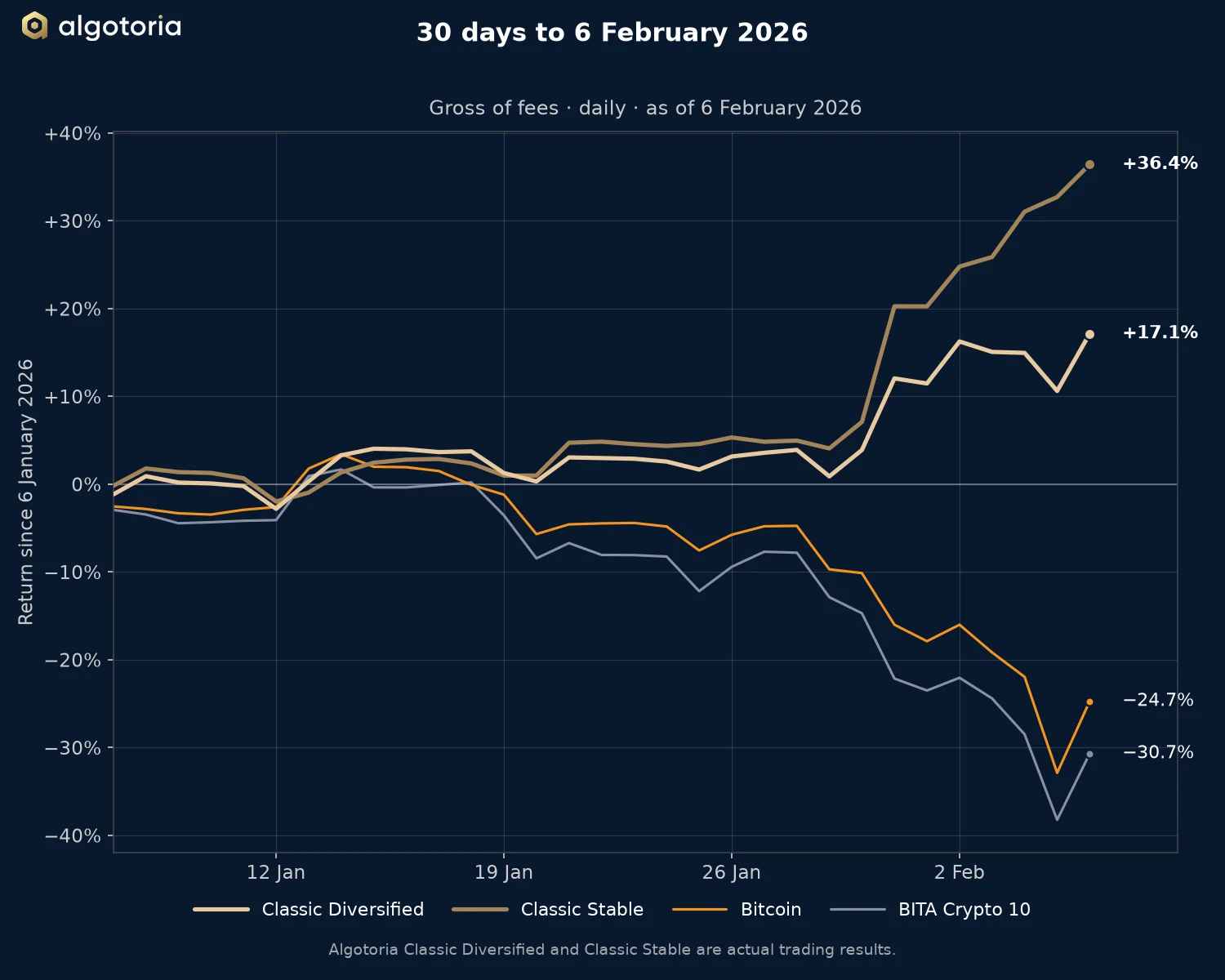
Crypto-assets fell sharply in the weeks to 6 February 2026. According to the investment team, Bitcoin stood almost 50% below its highs of the previous six months.
What drove the fall
- Liquidity stress. Crypto is the most volatile asset class, so it falls first. The investment team reads the fall as a symptom of stress in the wider economy, not as its cause.
- Weak technology shares and Nasdaq. When investors reduce risk, crypto-assets follow. The idea that they move independently of equity markets did not hold.
- Margin calls and liquidations. The forced closing of leveraged positions accelerated the fall, and leverage was cut quickly.
- ETF outflows. Crypto funds recorded net outflows of capital. Institutional investors stepped back, and the market lost a source of support.
The fall did not come as a surprise to the investment team, and the trend-following algorithms responded to the move as designed.
How the strategies performed
From the close of 6 January to the close of 6 February 2026, Classic Stable returned +36.42% and Classic Diversified +17.15%. Bitcoin returned −24.73% and the BITA Crypto 10 index −30.69% over the same period.
| Strategy | 12 months | Since 1 January 2024 |
|---|---|---|
| Classic Diversified | +48.26% | +509% |
| Classic Stable | +63.70% | +434% |
| Bitcoin | −26.91% | +60% |
| BITA Crypto 10 | −25.76% | +15% |
Since 1 January 2024, Classic Diversified has returned +509% and Classic Stable +434%, with reinvestment and before performance fees.
The strategies stayed systematic through the fall. Trend-following algorithms do not depend on the direction of the market. They depend on the market moving, and a sell-off of this kind is a strong, directional move.